
 EN
EN
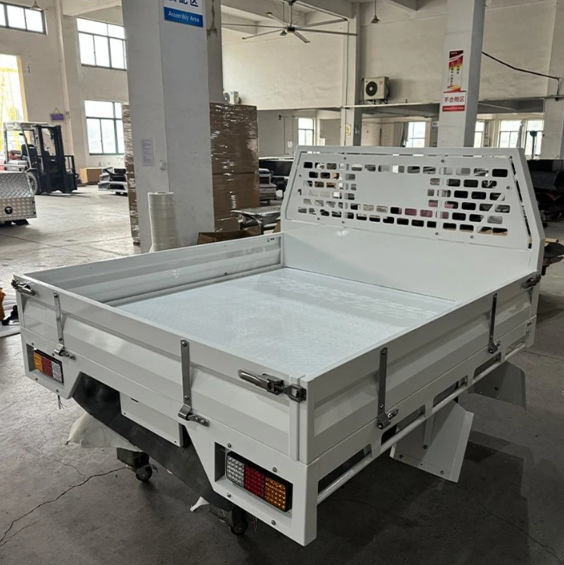
As someone who uses a ute for work, camping, or any kind of serious hauling, you are likely to understand that the tray is the heart of operations. It is the component that carries all of the essentials, whether that be tools, building materials, camping resources, or other supplies. However, whilst there are differences between simply tossing items into the back of the ute, and loading the ute tray appropriately, there are ways to do this effectively without risking your ute or your personal safety.
Effectively maximizing the load capacity of your ute is not solely based on your ability to stack on as much weight as you please. It is about comprehending how the various factors of weight distribution, the tie down points of the tray, and the points on the tray work cohesively. When you get the details correct, you will be able to drive with safety, better handling of the vehicle, and your cargo will be safe and undamaged.
Understand your tray's rated capacity
Every tray has a rated capacity for a reason. It is designed to hold a specific amount of weight based on the component's construction, components, and mounting structure to the vehicle. This is a hard limit for your own safety and the safety of those around you.
Your vehicle's chassis and suspension are designed to handle a specific weight, and anything over that rated capacity will begin to damage the mounting points of the tray. Over time, they will crack or bend. However, you can improve suspension components, which will save you from expensive repairs to the chassis. Positive performance will come from working within the rated capacity.
Start with a well built tray
The tray will determine the overall performance of the load in the vehicle. If you expect a thin tray to perform well and not sag and flex with load, then you are sorely disappointed. A well engineered tray is constructed from aluminum, which will provide the needed strength, and overall performance will not scale linearly with the load.
What are some benefits of aluminum trays? Unlike steel trays, they do not corrode, they are lighter, and they can be designed to carry a fully loaded pallet without bending. Quality trays will have reinforced corners, good cross members, and a strong floor. All of these features will allow the tray to avert major bending and twisting. A well made ute tray instills confidence in the user that whatever they are hauling is on a strong platform.
Avoid concentrated loads
Even though trays can be designed to take certain loads, one of the most common issues is for people to load the tray inappropriately. By this, I mean that the rear corners and the areas behind the cab are typically loaded with the heaviest items, which is very wrong. If that is the case, the load is exactly how the design of the tray and the design of the vehicle suspension are not meant to be used. Additionally, it will cause the vehicle to handle poorly, and in a worst case scenario, the tray will twist and the suspension will wear prematurely.
The aim here is to evenly distribute your load across the whole surface of the tray. Heavier items should go at the front closest to the cab. Keeping the center of gravity further forward will assist steering and braking. Lighter items should be further back. If you are taking a combination of heavy and light equipment, spend a moment to ensure the load is even and balanced.
Imagine you are loading a trailer. You would not want weight at the back of the trailer. The same applies to your ute tray. An unbalanced load is an unsafe load.
Use tie down points correctly
Without load restraints, a heavy load is unsafe. Using the wrong anchor points, using insufficient anchor points, and load restraints poorly configured to the load can create additional hazards, even if the load is secured properly. Your ute tray has multiple anchor points specifically designed to control and manage the forces that are created whenever you brake, accelerate, or turn.
Ensure you have rated your straps or chains for the weight you are using. Instead of concentrating the pull to one point, try to distribute your tie downs. This both spreads your load and decreases the pull on each anchor point. When using heavy items, use multiple straps. One strap may be sufficient to hold the item in place, but if it breaks, you have no security. With two straps, you have redundancy.
Your tie down angles are important too. For the most part, pulling straight down and straight forward are usually better than pulling at a steeper angle. When your tie downs are at an angle, they create lateral forces that can move your load or create additional stress on your tie down points.
Care for your tray surface
Even though the ute tray is built for harsh treatment, that does not mean you should treat it roughly. Rough treatment can create visible surface defects, like scratches and dents, that can weaken the surface or structure over time. If you are moving heavy or sharp items, or items that can create an abrasive surface, you should use a covering to provide additional protection.
Protective mats are useful on a number of levels. They cushion the flooring, prevent scratching, and keep the load from sliding. Additional protection for heavy machinery or palletized loads can be provided by adding a plywood sheet or an aluminum checker plate, as they help distribute the weight more evenly across the floor.
A well protected tray retains its shape longer, and a tray in good shape can handle heavy loads better.
Consider dynamic loads
This is a point where many get surprised. The weight of your load is not the only force that your tray has to withstand. The load produces dynamic forces that are higher than the static weight when you drive over bumps, hit potholes, or take sharp turns.
A load that feels just fine in the driveway can become dangerous on a rough road. This is where a safety margin becomes critical. If your tray is rated to handle 500 kilograms, carrying 480 is fine, but you are operating close to the limit. The rougher the road, the more those extra forces add up. Carrying a little less than the maximum available on the tray gives you a margin for those dynamic loads.
Match the load to the vehicle
Simply loading the vehicle with its tray and carrying components will not cause the vehicle to exceed its Gross Vehicle Mass rating. Each vehicle is designed with its own set of structural limits, so carrying loads that exceed the GVM rating will cause excessive stress to the vehicle's suspension, braking system, and chassis components.
If you frequently carry heavy loads, suspension upgrades or airbags may be needed to help the vehicle manage the weight. Even though these upgrades will not change the load capacity of the ute tray, they can improve the health and handling of the vehicle.
Check your tray regularly
Regular inspections are needed to check for cracks and other signs of damage, such as bending, sagging, or loose bolts. It is important to check that all bolts are properly tightened and that excessive movement has not been introduced to the tray.
A small crack or loose bolt is simple to address and fix early on. As the saying goes, a stitch in time saves nine. However, neglecting to fix something like that may result in the component failing, leading to being left stranded or, in the worst scenario, causing an accident. Doing a simple visual inspection gives you peace of mind on the road.
Load for the trip, not just the tray
Lastly, consider what you need to carry. It is tempting to load the back with too much gear. However, every extra kilogram is a new burden for the vehicle to carry. Before you hit the road, ask yourself if every item is absolutely necessary.
Think of work. You do not have to take every single tool from the shop. When it comes to camping, do not take a super heavy cooler if a lighter one is just as good. A lighter load means less stress on the vehicle and, over time, more money in your pocket. When driving, you will notice the difference.
Conclusion
Your ute tray has an important job. If you care for it, it will be able to give you great service for many years. Understand its limitations, check the condition of the tray and vehicle, keep loads secured and even, and distribute the weight properly. These habits will keep you from compromising the tray's integrity so you can carry everything you need.
Taking the time to properly load the tray will always guarantee that the trip is safer and smoother, whether you are taking tools to the job site or packing for a week in the bush. A correctly loaded ute will also get you to your destination with all your gear in the same location and condition that it was loaded.